

When couples start planning wedding catering, the first question is often about the menu. What should we serve? What will guests enjoy most? Which dishes feel right for the day?
Those are important decisions, but another choice shapes the reception just as much: how the meal is served.
Buffet, plated, and station-style wedding catering can all work beautifully. Each one offers a different experience for your guests, affects the pace of the evening, and changes how the reception feels from one moment to the next. What looks like a simple format choice on paper can influence guest flow, staffing, timing, and the overall atmosphere in a very real way.
The good news is that there is no single right answer for every wedding. The best wedding catering service is the one that fits your priorities, your guest experience goals, and the kind of celebration you want to create.
If you are comparing buffet, plated, and stations right now, this guide will help you understand what each style looks like in practice and how to decide which one best supports your reception.
Food service is not just about getting dinner to the table. It plays a major role in how the reception moves and how guests experience the evening.
A more structured service style can create a polished, traditional feel. A more flexible setup can encourage mingling and conversation.
Some formats keep guests seated and focused on the timeline. Others get people up, moving, and interacting throughout the room.
That is why service style affects more than the meal itself. It can shape:
This is often where couples start to see the bigger picture. You are not only choosing a way to serve food. You are choosing how dinner will support the rest of the wedding reception.
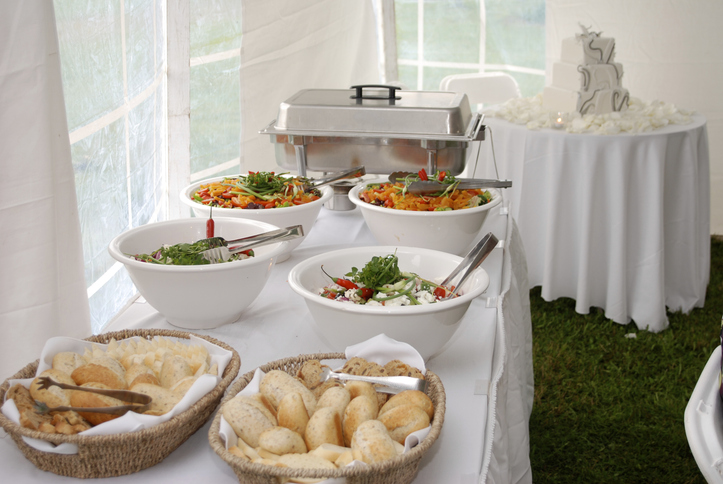
Buffet service remains a popular choice for good reason. It is familiar, approachable, and often creates a comfortable atmosphere for a wide range of guests.
In a buffet setup, guests typically move through a line or multiple lines to choose their meal. That offers more flexibility than a plated dinner, since guests can often choose portion sizes and select the items that appeal most to them. For couples with a mixed guest list, that can feel especially practical.
Buffet service works well when the goal is a warm, welcoming reception that feels easy to navigate. It can be a strong fit for couples who want a less rigid dinner structure and appreciate that guests have some freedom over what they take and how much they eat.
That said, buffet service does shape the evening in a few important ways. Guest movement becomes part of the dinner experience, which means line flow matters. If the room setup is not handled thoughtfully, buffet lines can create waiting, congestion, or uneven pacing between tables. Some guests may be served and seated while others are still waiting for their turn.
This does not mean buffet service is less polished. It simply means execution matters. Releasing tables in a logical order, setting up the buffet in the right place, and making sure staffing supports smooth movement all help buffet service feel organized rather than rushed.
Buffet service can be a strong choice if you want your reception to feel relaxed, generous, and guest-friendly without being overly formal.
Plated service creates a very different reception experience. Instead of guests getting up to serve themselves, meals are brought directly to the table in a coordinated sequence.
For many couples, plated service feels more formal and more traditional. It naturally creates a sense of structure because guests remain seated and dinner follows a clear progression. That can work especially well when you want the reception to feel elegant, organized, and easy to pace around speeches, toasts, or other important moments.
A plated meal also keeps guests’ attention more centralized. Because everyone is seated, transitions can be easier to manage, and the flow can be maintained throughout the evening. That often makes plated service appealing for couples who want a classic reception format with a defined timeline.
Another advantage is consistency. When service is timed well, the meal feels coordinated and intentional. It also tends to be especially comfortable for guests who may prefer not to stand in line or move around during dinner.
At the same time, plated service requires more advanced planning. Entrée selections often need to be made in advance, dietary accommodations should be clearly organized, and timing should be carefully managed so food is delivered efficiently and at the right temperature. Staffing also plays a significant role because the service depends on a team that can execute the meal smoothly and at the proper pace.
If you are leaning toward a seated dinner experience, Carson’s has already covered some of the best sit-down dinner options for your wedding, which can be helpful as you think through what a plated reception might look like for your guest list.
Stations bring a more dynamic feel to the reception. Rather than a single buffet line or a fully seated dinner, guests visit different food stations throughout the meal.
This style often feels more social and interactive because it encourages movement and creates natural gathering spots for guests to talk. It can make dinner feel less like a single scheduled block and more like part of the overall celebration.
For couples who want energy and flexibility, stations can be very appealing. Guests may appreciate having multiple options across different locations, and the format can help create a reception that feels more relaxed and conversational. It can also work well when the goal is to avoid the formality of a plated meal without relying on one central buffet line.
Still, stations are not automatically the easiest option just because they feel casual. In many cases, they require thoughtful planning to work well. Placement matters. Traffic patterns matter—signage and staffing matter. If stations are not laid out strategically, guests may crowd one area while another goes underused, which can affect both flow and timing.
Stations also tend to create a different rhythm in the reception. Some guests may eat immediately, while others spend more time mingling before they choose food. That can be perfect for couples who want a lively atmosphere, but it is important to ensure the style matches the rest of the timeline.
When station service is done well, it can feel inviting, flexible, and highly engaging. When it is not planned carefully, it can feel scattered. That is why the format alone never tells the whole story.
If all three options can work, how do you actually choose?
A good starting point is to stop asking which service style is best in general and start asking which one is best for your wedding.
Think first about the atmosphere you want to create. Do you picture a more formal dinner where everyone is served together, with the evening following a clear structure? A plated meal is the right fit. Do you want something familiar and comfortable that gives guests a little more freedom? A buffet may enhance that experience. Are you hoping for a reception that feels social, flexible, and interactive throughout dinner? Stations may make more sense.
It also helps to think about the pace of the evening. Some couples want dinner to feel like a distinct, organized part of the celebration. Others want it woven more naturally into a reception where guests move, mingle, and engage throughout the night.
Guest comfort should also stay part of the conversation. A younger, highly social crowd may enjoy a more active station setup. A mixed-age guest list may appreciate the ease and familiarity of buffet service or the comfort of a plated meal. The right decision is often the one that fits your people just as much as your personal style.
And of course, logistics matter. Guest count, room layout, service timeline, and staffing all influence which format will work most smoothly. This is one reason many couples benefit from understanding the difference between full-service catering and drop-off catering as they compare options. The meal format and the level of support behind it often go hand in hand.
It is easy to compare buffet, plated, and stations as if the choice comes down to format alone. In reality, the success of any wedding catering service depends just as much on how it is executed.
A buffet can feel smooth and welcoming when line flow is well planned, and service is paced correctly. A plated dinner can feel seamless when staffing is strong and timing is coordinated with the reception schedule. Stations can feel engaging and natural when placement, replenishment, and guest movement have been carefully considered.
The opposite is also true. Even a format that looks perfect on paper can cause stress if it is not well managed behind the scenes.
That is why experienced catering support matters so much. Couples should not have to figure out service timing, floor flow, or staffing strategy on their own. Those details shape the guest experience in ways that are not always obvious during planning, but they become very noticeable on the wedding day.
A strong catering partner helps you think beyond the menu and into the full experience. That includes how the room will move, how dinner fits into the timeline, how guests will be served, and how the evening will stay comfortable from start to finish.
A buffet, plated service, and stations can all create an excellent wedding reception. There is no universal best option, only the one that best supports your wedding day.
If you want flexibility and familiarity, buffet service may be the right fit. If you want a more polished and structured dinner, plated service may make the most sense. If you want a social, interactive reception flow, stations may be a better choice.
The most important thing is choosing a service style that fits the atmosphere you want, the pace you prefer, and the experience you want your guests to have.
At Carson’s Catering, couples do not have to make that decision alone. If you are planning your reception and comparing service styles, our team can help you decide which option best fits your wedding and ensure the entire experience feels smooth, thoughtful, and well-executed. Contact us today to get started!

